📞
BSIS PPO License: 122365
+1 (818) 966-2279
✉️
Sahnaz@workforcesecurityservices.com
Workplace Violence Prevention: What Every Los Angeles Business Should Know
Workplace violence is no longer a concern limited to high-risk industries or large corporate offices. Across Los Angeles, businesses of every size—from office buildings and retail stores to warehouses, healthcare facilities, schools, and construction sites—are facing growing concerns about employee safety, visitor threats, and incidents of aggression in the workplace.
For employers, workplace violence prevention is not just about responding to emergencies. It is about building a safer environment where employees feel protected, risks are identified early, and professional systems are in place to reduce the chance of serious incidents.
Many business owners assume workplace violence only refers to physical attacks. In reality, it includes a much wider range of behaviors, such as threats, intimidation, harassment, verbal abuse, stalking, and unauthorized confrontations that create fear or disrupt operations.
Ignoring these warning signs can lead to serious legal, financial, and reputational consequences. Preventing workplace violence requires proactive planning, employee awareness, access control, trained security personnel, and clear response procedures.
In this blog, we will explain what workplace violence looks like, why it is becoming a growing issue in Los Angeles, and the practical steps every business should take to protect employees and operations.
What Is Workplace Violence?
Workplace violence refers to any act or threat of physical violence, harassment, intimidation, or disruptive behavior that occurs at a worksite.
It can involve:
- Employees
- Former employees
- Customers or clients
- Vendors and contractors
- Visitors
- Domestic disputes entering the workplace
- Unauthorized intruders
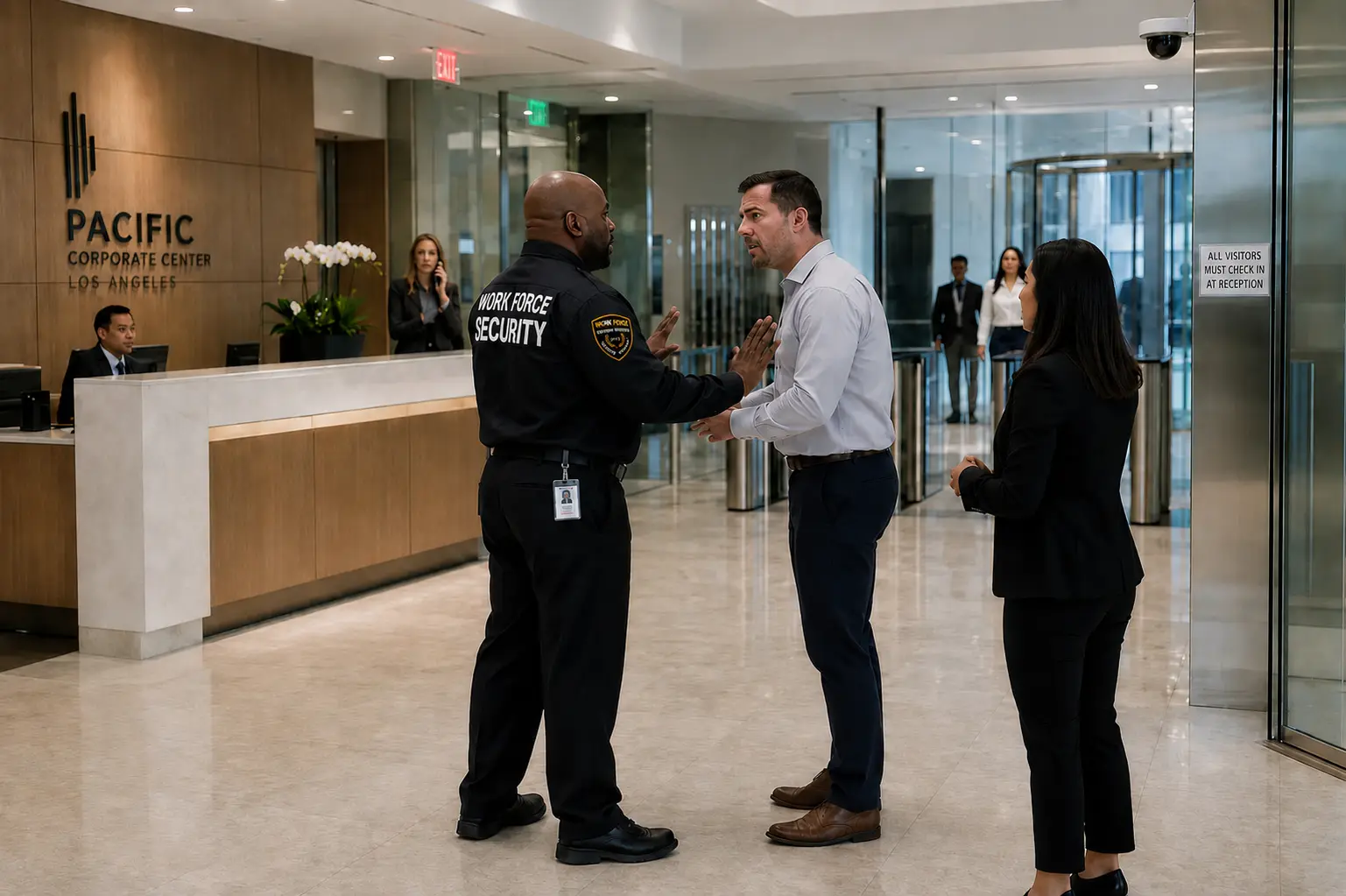
Incidents can range from verbal threats and aggressive confrontations to physical assault, vandalism, and active shooter situations.
Many serious cases begin with smaller warning signs that are ignored or underestimated.
Understanding these risks early is critical for prevention.
Common Types of Workplace Violence
Businesses in Los Angeles may face workplace violence from different sources depending on the industry and environment.
Employee-to-Employee Conflict
Disputes between coworkers, supervisors, or terminated employees can escalate if not managed properly.
This may involve:
- Verbal threats
- Harassment
- Physical intimidation
- Retaliation after disciplinary action
- Violent behavior after termination
Customer or Client Aggression
Retail stores, hospitals, hospitality businesses, and service industries often face aggressive behavior from customers.
Examples include:
- Verbal abuse
- Threats toward staff
- Physical confrontations
- Angry disputes over service issues
Domestic Violence Spillover
Sometimes personal conflicts follow employees into the workplace.
This may include:
- Harassment by former partners
- Unauthorized visits
- Stalking
- Threatening confrontations in parking lots or office entrances
Criminal Intent
Some incidents involve robbery, trespassing, vandalism, or targeted criminal activity that puts employees at risk.
This is common in:
- Late-night businesses
- Financial institutions
- Retail stores
- Construction sites
- Commercial properties with limited access control
Why Workplace Violence Is Increasing in Los Angeles
Los Angeles businesses operate in a fast-paced, high-pressure environment where multiple external and internal factors can increase security risks.
Some contributing factors include:
Rising Public Safety Concerns
Businesses across California are seeing increased concerns related to theft, aggressive trespassing, and public disturbances.
High Employee Stress Levels
Financial pressure, job insecurity, and workplace burnout can increase emotional tension and conflict.
Increased Public Access to Commercial Spaces
Office buildings, retail centers, schools, and healthcare facilities often manage high visitor traffic, making access control more difficult.
Lack of Preventive Security Planning
Many businesses wait until an incident occurs before addressing workplace violence prevention.
Reactive security is usually more expensive and less effective than proactive planning.
Warning Signs Employers Should Never Ignore
Workplace violence often develops over time.
Recognizing early warning signs can prevent serious incidents.
Common red flags include:
- Repeated aggressive behavior
- Verbal threats toward coworkers or management
- Sudden extreme mood changes
- Obsession with conflicts or revenge
- Harassment complaints
- Refusal to follow workplace rules
- Unauthorized attempts to access restricted areas
- Suspicious loitering near entrances or parking lots
- Former employees returning unexpectedly
Not every warning sign leads to violence, but every concern should be taken seriously and documented properly.
Practical Steps to Prevent Workplace Violence
A strong prevention strategy combines policies, employee awareness, physical security, and professional security support.
1. Establish a Clear Workplace Violence Prevention Policy
Every business should have written policies explaining:
- Zero tolerance for threats or violence
- Reporting procedures for suspicious behavior
- Emergency response steps
- Visitor access expectations
- Employee conduct standards
- Post-incident reporting requirements
Clear policies create accountability and help employees understand how to respond.
2. Improve Access Control
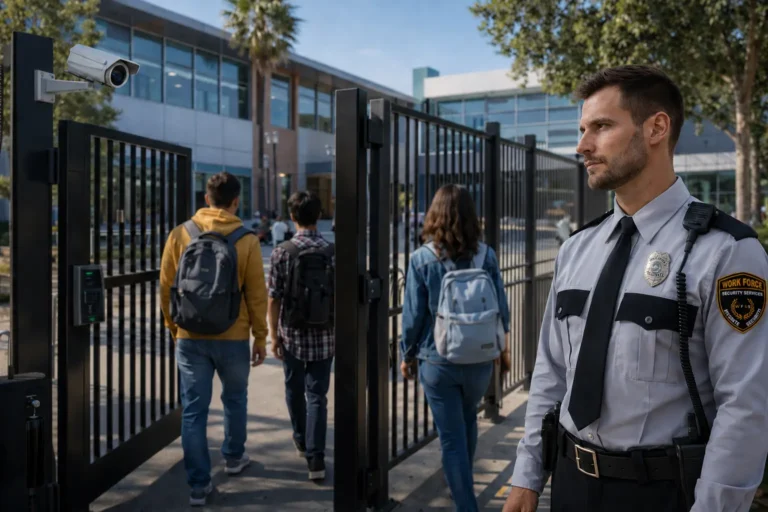
Controlling who enters the workplace is one of the most effective prevention measures.
This includes:
- Secured entrances
- Visitor sign-in procedures
- Access badges for employees
- Restricted access zones
- Controlled delivery entry
- Parking lot monitoring
Unauthorized access often creates preventable risk.
Businesses should never rely solely on unlocked front desks or informal visitor management.
3. Train Employees to Recognize Threats
Employees are often the first to notice warning signs.
Training should cover:
- How to report concerns
- De-escalation awareness
- Emergency communication procedures
- Suspicious visitor identification
- Active threat response planning
Prepared employees improve both prevention and response speed.
4. Strengthen Parking Lot and Exterior Security
Many incidents begin outside the building before reaching the workplace.
Security attention should include:
- Parking structures
- Employee entrances
- Delivery zones
- Loading docks
- Public access points
- Night shift access routes
Well-lit and monitored exterior areas reduce risk significantly.
5. Use Professional Security Guards
Security guards provide active protection that cameras and policies alone cannot replace.
Visible Deterrence
A professional security presence discourages aggressive behavior, unauthorized entry, and potential threats.
Visitor Screening
Security personnel can verify visitors, monitor deliveries, and manage high-risk access points.
Fast Incident Response
Trained guards respond quickly to disturbances, helping prevent escalation.
Employee Reassurance
Employees feel safer when there is a visible, reliable security presence.
This improves workplace confidence and overall operational stability.
For many Los Angeles businesses, professional security guards are one of the strongest workplace violence prevention tools available.
6. Conduct Threat Assessments Regularly
Security risks change over time.
Businesses should regularly review:
- Access vulnerabilities
- Employee safety concerns
- Incident history
- Visitor management gaps
- Termination procedures
- High-risk operational periods
Professional security assessments help identify problems before they become emergencies.
Special Attention During Employee Terminations
Terminations and disciplinary actions can create elevated risk.
Employers should handle these situations carefully by:
- Limiting emotional escalation
- Coordinating exit procedures
- Restricting system access immediately
- Monitoring post-termination visits
- Using security presence when necessary
Many serious workplace violence incidents occur after poorly managed employee separations.
Planning matters.
Why Private Security Services Matter
Many businesses assume workplace violence prevention is only an HR responsibility.
In reality, effective prevention requires operational security, physical protection, and trained response systems.
Private security services provide:
- On-site guard presence
- Access control management
- Emergency response support
- Visitor verification
- Patrol services
- Incident documentation
- Threat response coordination
This creates stronger daily protection for both employees and business operations.
In Los Angeles, where commercial properties face increasing security demands, professional security services are becoming a practical business necessity rather than an optional upgrade.
Final Thoughts
Workplace violence prevention is not about preparing for worst-case scenarios alone. It is about creating a professional environment where risks are identified early, employees feel protected, and businesses can operate with confidence.
Threats often begin with small warning signs—an argument, an unauthorized visitor, aggressive behavior, or repeated complaints that seem easy to dismiss.
The businesses that respond early are the ones most likely to prevent serious incidents later.
For Los Angeles employers, prevention means combining strong policies, access control, employee awareness, exterior security, and trained professional security personnel who can actively protect the workplace.
A safer workplace protects more than people—it protects productivity, reputation, legal compliance, and long-term business stability.
When workplace violence prevention becomes part of everyday operations, everyone benefits.