📞
BSIS PPO License: 122365
+1 (818) 966-2279
✉️
Sahnaz@workforcesecurityservices.com
How to Prevent Package Theft in Gated Communities in Los Angeles
Package theft has become one of the most common security concerns for residential communities across Los Angeles. Even gated communities, which are often considered safer than open-access neighborhoods, are not immune to this growing issue. With the rise of online shopping and same-day delivery services, more packages are being left unattended at doorsteps, mailrooms, and front lobbies—creating easy opportunities for theft.
Residents in gated communities often assume that controlled access automatically guarantees protection. However, unauthorized visitors, gaps in delivery access, tailgating, and poor surveillance can still leave these properties vulnerable. For homeowners’ associations (HOAs), property managers, and residents, package theft is not just an inconvenience—it can lead to frustration, financial loss, and concerns about overall community safety.
Preventing package theft requires more than locked gates. It involves a combination of access control, resident awareness, delivery management, surveillance, and professional security support.
In this blog, we will examine the most common causes of package theft in gated communities and practical ways to reduce the risk while maintaining a safe, welcoming residential environment.
Why Package Theft Happens Even in Gated Communities
Many people associate gated communities with strong security, but criminals often look for weaknesses in routine operations rather than obvious access points.
Some of the most common reasons package theft occurs include:
Unsecured Delivery Access
Delivery drivers frequently need quick access to multiple homes. If gates are left open too long or access codes are widely shared, unauthorized individuals can enter without much difficulty.
Tailgating Through Entry Gates
Tailgating happens when an unauthorized vehicle follows a resident or approved visitor through the gate before it closes. This is one of the easiest ways for thieves to enter a secured neighborhood.
Packages Left in Visible Areas
Boxes placed near front doors, mailrooms, or apartment lobbies are easy targets—especially when they remain unattended for hours.
Limited Surveillance Coverage
Some communities rely on minimal camera coverage that does not fully monitor entrances, delivery zones, or shared package areas.
Lack of On-Site Security Presence
Without trained personnel monitoring visitor activity, suspicious behavior can go unnoticed.
Understanding these weak points is the first step toward creating a stronger package theft prevention plan.
The Real Impact of Package Theft
At first glance, stolen packages may seem like a minor issue compared to other security concerns. However, repeated incidents can create larger problems for the entire community.
Resident Frustration and Complaints
Frequent theft leads to dissatisfaction among homeowners and tenants, especially when they feel management is not taking action.
Loss of Trust in Community Security
Residents begin questioning whether gates, cameras, and management policies are truly effective.
Increased Liability Concerns
Property managers and HOAs may face pressure to improve safety standards and address repeated complaints.
Damage to Community Reputation
Luxury apartments, condominiums, and gated communities rely heavily on reputation. Security issues can affect leasing decisions and property value perceptions.
Preventing theft is not only about protecting deliveries—it is about protecting confidence in the community itself.
Practical Ways to Prevent Package Theft
Reducing package theft requires a layered approach. No single solution works alone, but combining several measures significantly improves protection.
1. Improve Gate Access Control
A secure entrance is the foundation of community safety.
Limit Shared Gate Codes
Avoid using one permanent gate code for all vendors and guests. Shared codes often spread quickly and are difficult to control.
Instead, consider:
- Temporary visitor access codes
- Resident-approved guest access systems
- Delivery-specific entry authorization
- Mobile visitor management systems
Monitor Tailgating
Security personnel or gate attendants can help prevent unauthorized vehicles from entering behind residents.
Communities should also educate residents not to allow unknown vehicles to follow them through the gate.
2. Create Secure Package Delivery Zones
Leaving packages at individual front doors increases theft risk.
Centralized Package Rooms
Dedicated package rooms with controlled access offer much better protection than doorstep delivery.
These rooms should include:
- Access logs
- Surveillance cameras
- Restricted resident-only entry
- Delivery verification systems
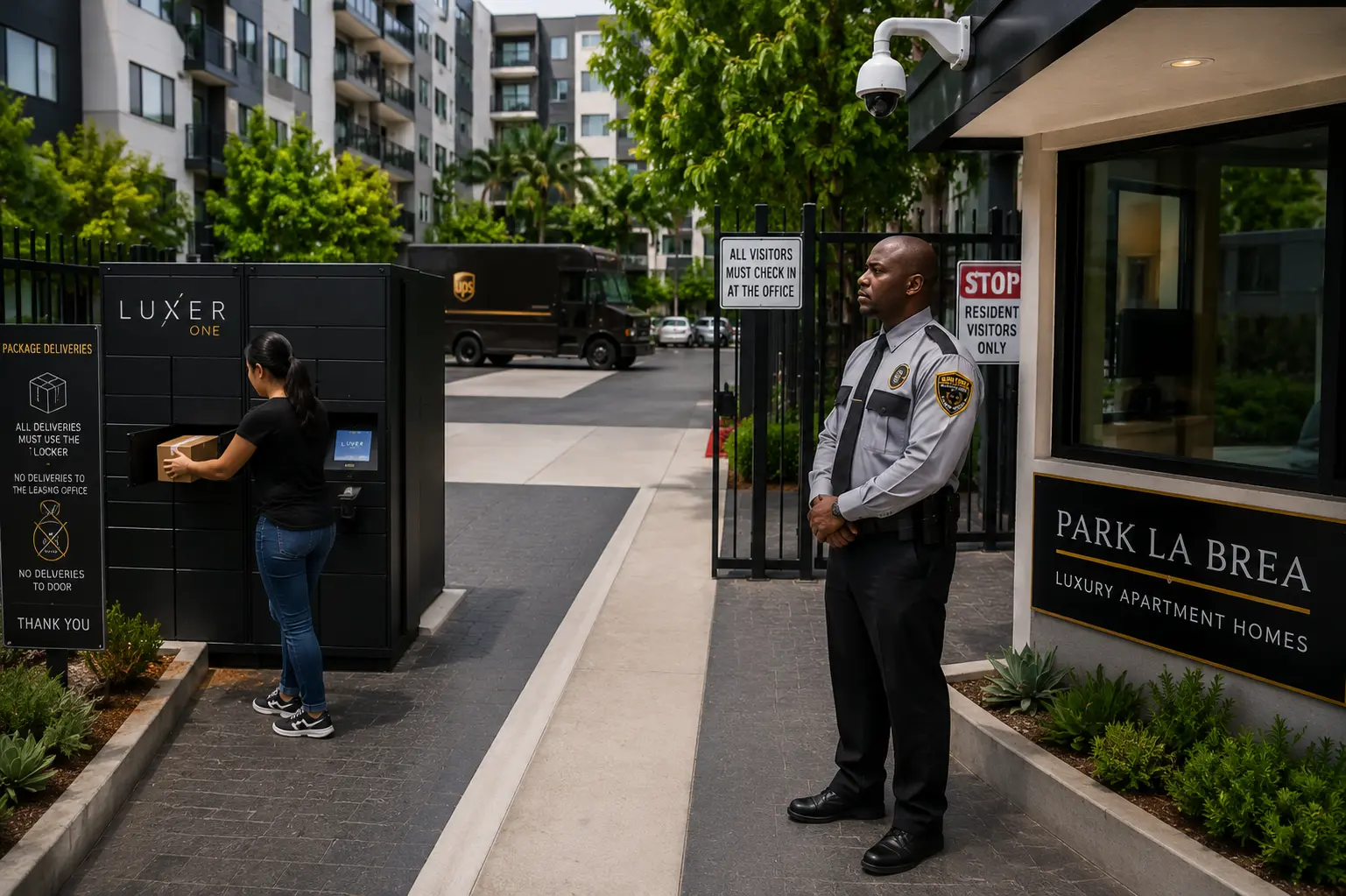
Lockers for High-Volume Communities
Package locker systems are increasingly popular in apartment complexes and condominium communities. Residents receive secure pickup codes, reducing exposure to theft.
This works especially well for communities with frequent daily deliveries.
3. Use Visible Security Camera Coverage
Cameras play both a preventive and investigative role.
Focus on High-Risk Areas
Surveillance should cover:
- Main entrances and gates
- Mailrooms and package lockers
- Lobby areas
- Front office delivery zones
- Visitor parking areas
Visible cameras discourage opportunistic theft and help identify suspicious activity when incidents occur.
Regularly Review Camera Quality
Old or poorly placed cameras often fail to capture useful evidence. Security systems should be reviewed regularly to ensure proper visibility and recording quality.
4. Hire Professional Residential Security Guards
Technology helps, but trained security personnel provide active protection that cameras alone cannot offer.
Monitoring Deliveries and Visitor Access
Security guards can verify visitors, monitor delivery traffic, and prevent unauthorized access during busy hours.
This is especially important for large gated communities where multiple vendors enter daily.
Identifying Suspicious Behavior
Experienced guards are trained to notice unusual activity, loitering, repeated vehicle presence, or unauthorized individuals moving through residential areas.
Responding Quickly to Incidents
A fast response often prevents small security concerns from becoming larger problems.
Residents also feel more confident when there is a visible professional security presence on-site.
For many communities in Los Angeles, residential security guards provide the strongest day-to-day theft prevention support.
5. Strengthen Resident Communication
Security works best when residents are part of the process.
Encourage Delivery Tracking
Residents should monitor delivery notifications and retrieve packages as soon as possible after arrival.
Promote Safe Delivery Instructions
Examples include:
- Deliver to the leasing office
- Deliver to the secured locker
- Signature required for valuable items
- Use the designated package room only
Report Suspicious Activity Quickly
Residents should know exactly how to report unknown visitors, suspicious vehicles, or repeated delivery concerns.
Strong communication helps security teams respond faster and more effectively.
6. Establish Clear Delivery Policies for Vendors
Delivery companies often follow convenience rather than security unless clear rules are in place.
Property managers should provide clear instructions for:
- Approved delivery access points
- Restricted drop-off areas
- Signature requirements were needed
- After-hours delivery limitations
Consistent vendor policies reduce confusion and improve accountability.
7. Improve Lighting Around Delivery Areas
Poor lighting creates opportunities for theft, especially during evening deliveries.
Well-lit entrances, mailrooms, pathways, and package pickup areas improve visibility for residents, security personnel, and surveillance cameras.
Lighting is one of the simplest and most cost-effective security upgrades available.
8. Conduct Regular Security Assessments
Security risks change over time.
A community that was secure two years ago may now face new delivery patterns, access issues, or neighborhood crime trends.
Regular professional security assessments help identify:
- Blind spots in surveillance
- Access control weaknesses
- Resident safety concerns
- Areas with repeated theft incidents
This allows HOAs and property managers to make proactive improvements instead of reacting after repeated losses.
Why Professional Security Services Make a Difference
Many communities try to solve package theft with cameras alone. While surveillance is helpful, theft prevention is strongest when there is active human oversight.
Professional security services provide:
- Controlled visitor access
- Delivery monitoring
- Incident reporting
- Patrol services
- Resident reassurance
- Immediate response to suspicious activity
This creates a stronger overall security environment, not just package protection.
For gated communities in Los Angeles, where delivery volume is high and property expectations are even higher, professional residential security often becomes a practical long-term investment rather than an optional expense.
Final Thoughts
Package theft in gated communities is a real and growing concern across Los Angeles. Gates alone are not enough to prevent unauthorized access or protect unattended deliveries.
The most effective approach combines strong access control, secure delivery systems, surveillance, resident cooperation, and trained security professionals who can actively monitor and respond.
For HOAs, condominium boards, apartment managers, and private residential communities, preventing package theft is about more than replacing lost boxes. It is about maintaining trust, protecting property value, and creating the safe living environment residents expect.
A proactive security strategy today helps prevent repeated problems tomorrow.
When communities treat package security as part of overall residential protection, everyone benefits.