📞
BSIS PPO License: 122365
+1 (818) 966-2279
✉️
Sahnaz@workforcesecurityservices.com
How Retail Stores Can Reduce Shoplifting Without Hurting Customer Experience
Retail stores across Los Angeles are facing a growing challenge: how to reduce shoplifting while still maintaining a welcoming and positive shopping experience for customers.
From small independent stores to large shopping centers, theft-related losses continue to affect daily operations, employee safety, and overall profitability. Many business owners respond by increasing visible security measures, tightening store policies, or limiting customer access to products. While these steps may help reduce theft, they can also unintentionally create frustration for honest customers if handled poorly.
The goal should not be to make customers feel watched or uncomfortable. Instead, effective retail security focuses on creating a safe, organized, and professional environment where theft becomes more difficult without damaging trust or convenience.
Shoplifting prevention works best when security feels natural rather than aggressive. Good store design, trained staff, surveillance systems, access control, and professional security guards can all work together to protect inventory while preserving customer satisfaction.
In this blog, we will look at why shoplifting remains a serious issue for Los Angeles retailers and practical ways stores can reduce losses without negatively affecting the shopping experience.
Why Shoplifting Is a Growing Concern for Retail Stores
Retail theft is not limited to large department stores. Grocery stores, pharmacies, clothing shops, electronics stores, convenience stores, and luxury retailers all face security risks.
Common causes include:
Easy Access to High-Value Merchandise
Products placed near exits or in poorly monitored areas are often easy targets for quick theft.
Limited Staff Visibility
When employees are focused on operations behind the counter or in stockrooms, theft opportunities increase on the sales floor.
Organized Retail Crime
Some incidents involve repeat offenders or coordinated theft groups targeting multiple stores for resale purposes.
Reduced Security Presence
Stores without visible security measures may appear easier to target.
Poor Store Layout
Blind corners, blocked camera views, and cluttered displays create opportunities for theft without detection.
Shoplifting affects more than lost merchandise—it impacts staff morale, operational costs, insurance, and customer confidence.
Why Aggressive Anti-Theft Tactics Can Backfire
Some retailers react to theft by turning the shopping experience into a heavily restricted environment.
This may include:
- Locking too many products behind counters
- Following customers too closely
- Overly aggressive bag checks
- Excessive employee confrontation
- Visible suspicion toward all visitors
These actions may reduce convenience and create tension for legitimate shoppers.
Customers who feel distrusted are less likely to return, leave positive reviews, or recommend the business.
Security should protect the store without creating a hostile environment.
That balance is critical.
Practical Ways to Reduce Shoplifting Without Hurting Customer Experience
The best solutions combine prevention, visibility, and professionalism rather than confrontation alone.
1. Improve Store Layout for Natural Surveillance
Store design plays a major role in theft prevention.
Keep Sightlines Open
Employees should be able to easily see major shopping areas from key positions.
Avoid:
- Tall shelving that blocks visibility
- Cluttered promotional displays
- Hidden corners near exits
- Poorly lit product sections
Open layouts make theft more difficult while improving customer comfort.
Place High-Risk Products Strategically
Items like electronics, cosmetics, alcohol alternatives, accessories, and small high-value goods should be positioned where staff visibility is strongest.
This does not always require locked displays—better placement often works just as well.
2. Train Employees in Customer Service-Based Prevention
One of the strongest theft prevention tools is simple employee engagement.
Friendly Customer Acknowledgment
Greeting customers when they enter creates awareness that staff are attentive without creating discomfort.
This small action alone discourages many opportunistic theft attempts.
Active Floor Presence
Employees walking the sales floor help improve both service and security.
This supports:
- Customer assistance
- Faster theft detection
- Reduced suspicious behavior
- Stronger store atmosphere
Professional service often works better than confrontation.
3. Use Visible but Non-Intrusive Surveillance Cameras
CCTV systems help deter theft while supporting incident investigation.
Focus on Key Areas
Surveillance should cover:
- Entrances and exits
- Self-checkout areas
- High-value product zones
- Fitting rooms entrance areas
- Register counters
- Parking lot access points
Visible cameras create accountability without negatively affecting shopping comfort.
Maintain Camera Quality
Poor image quality limits usefulness.
Regular review ensures cameras actually support security operations when incidents occur.
4. Hire Professional Retail Security Guards
Security guards provide active protection while helping maintain a calm shopping environment.
Visible Deterrence Without Intimidation
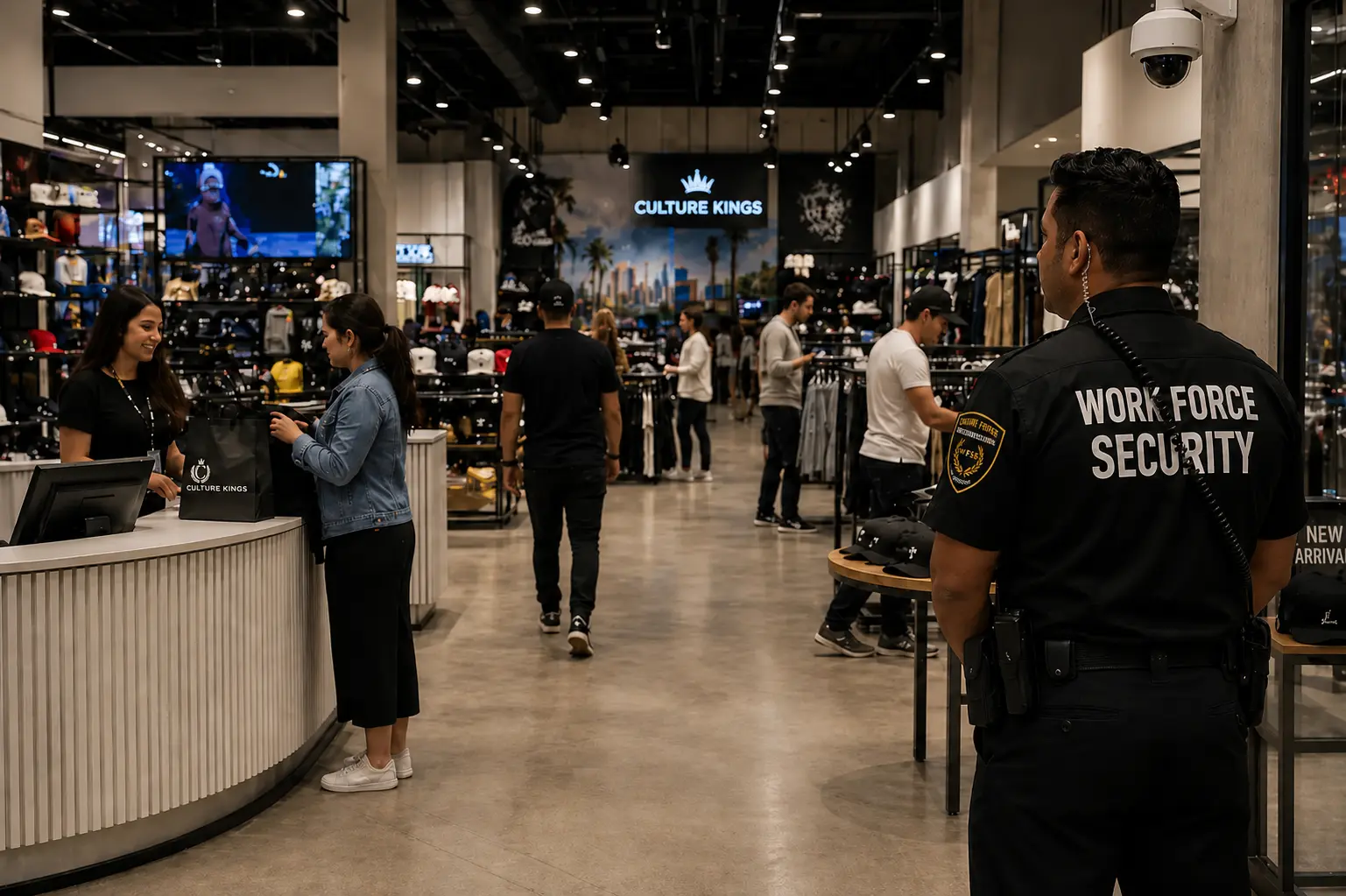
A professional security guard positioned near entrances or patrol areas discourages theft while reassuring customers and staff.
The goal is presence—not pressure.
Managing High-Risk Situations
Security personnel can handle suspicious behavior, theft attempts, aggressive customers, and emergency response more effectively than sales staff.
This allows employees to focus on customer service instead of confrontation.
Parking Lot and Exterior Monitoring
Retail security should also include:
- Store entrances
- Delivery zones
- Employee access points
- Customer parking areas
Many theft-related incidents begin outside the store before entering the retail floor.
Professional guards help protect the full environment.
5. Improve Checkout Area Security
Many theft incidents happen near registers or self-checkout zones.
Organized Checkout Visibility
Registers should be positioned to monitor customer flow clearly.
Employees should have strong visibility of:
- Exit pathways
- Bagging areas
- High-traffic aisles
- Self-checkout behavior
Reduce Self-Checkout Vulnerabilities
Where self-checkout exists, monitoring must remain active.
This can include:
- Floor staff support
- Camera coverage
- Receipt verification procedures when appropriate
The process should feel smooth, not accusatory.
6. Strengthen Inventory Management
Shrinkage often goes unnoticed when inventory controls are weak.
Regular audits help identify:
- Theft patterns
- Repeat target products
- Employee theft risks
- Delivery discrepancies
- Vendor-related losses
Good inventory tracking supports better prevention decisions.
7. Use Controlled Access for Back-of-House Areas
Not all theft comes from customers.
Stockrooms, loading docks, and employee-only areas should remain secured through:
- Access badges
- Restricted key access
- Delivery verification
- Security patrol monitoring
Internal security is just as important as customer-facing prevention.
8. Build a Calm and Professional Security Culture
Customers notice store atmosphere immediately.
A clean, organized, and professionally managed retail space naturally reduces theft opportunities.
This includes:
- Strong lighting
- Clear signage
- Organized merchandise placement
- Attentive employees
- Professional security presence
- Consistent policies
Security should feel like part of good operations—not a separate problem.
Why Professional Security Services Make a Difference
Retail businesses often rely too heavily on cameras alone.
While surveillance helps, active prevention requires trained personnel who can respond in real time.
Professional security services provide:
- On-site guard presence
- Theft deterrence
- Incident response
- Customer and employee safety
- Parking lot monitoring
- Delivery area security
- Loss prevention support
This improves both security and operational confidence.
For many Los Angeles retailers, private security services are no longer just for luxury stores or large malls—they are becoming an important part of daily business protection.
Final Thoughts
Reducing shoplifting should never come at the cost of customer trust.
Retail stores that rely only on restrictions and confrontation often create a worse shopping experience while still struggling with theft.
The better approach is balanced prevention: strong store design, employee awareness, surveillance, checkout visibility, secure inventory management, and trained professional security guards who support safety without disrupting the customer journey.
In Los Angeles, where retail competition is high and theft concerns continue to grow, stores that combine strong security with excellent customer experience are the ones most likely to succeed long term.
Customers want to feel safe, respected, and comfortable.
Good retail security helps make that possible.