📞
BSIS PPO License: 122365
+1 (818) 966-2279
✉️
Sahnaz@workforcesecurityservices.com
School and Campus Security Best Practices in Los Angeles
Schools and educational campuses play a vital role in communities across Los Angeles. From elementary schools and high schools to colleges and private educational institutions, campuses are environments where students, teachers, and staff gather every day to learn and work. Maintaining a safe and secure environment is essential for ensuring that educational activities can continue without disruption.
While most schools operate safely, educational institutions must still prepare for a variety of safety challenges. These may include unauthorized visitors, theft, vandalism, disturbances, and emergencies. Schools are also responsible for protecting large groups of students while maintaining a welcoming and accessible environment.
For these reasons, many schools and campus administrators develop comprehensive security strategies that combine trained personnel, security technology, and well-planned safety procedures. In a large city like Los Angeles, where campuses may serve hundreds or thousands of students, proactive security planning is particularly important.
This article explores several best practices that schools and campuses can follow to improve safety and maintain a secure learning environment.
Understanding Security Challenges on School Campuses
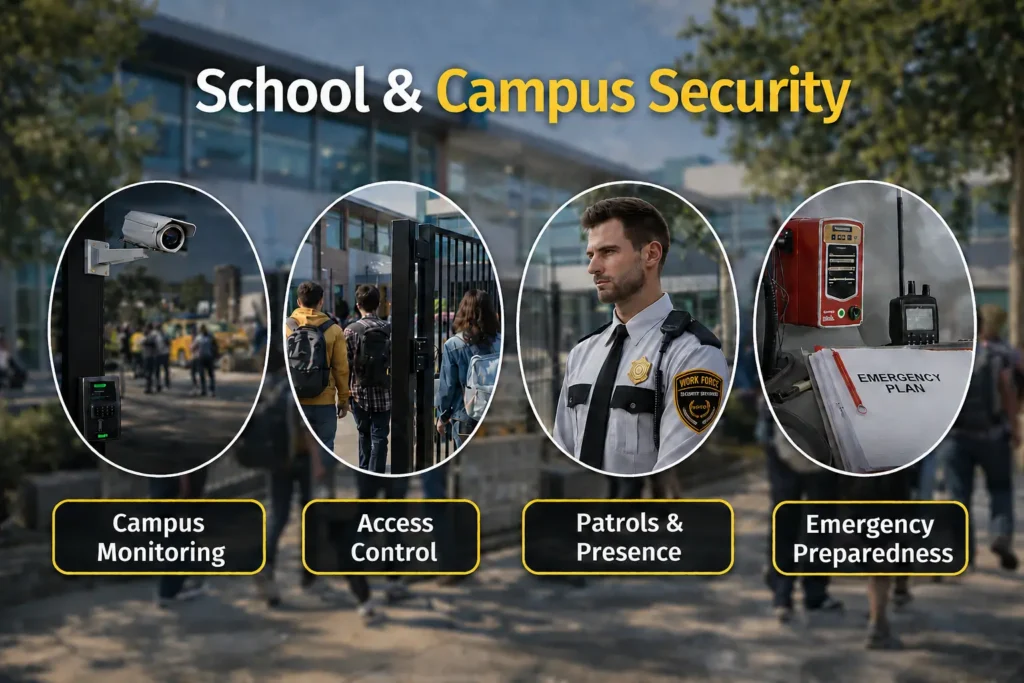
School campuses present unique security challenges because they are designed to be open environments that encourage learning and collaboration. Students, staff members, parents, visitors, and service providers may enter the campus during the day.
Managing this activity while maintaining safety requires thoughtful planning.
Some common security concerns for educational institutions include:
- unauthorized individuals entering the campus
- theft of equipment or personal belongings
- vandalism or property damage
- disturbances or conflicts between individuals
- emergencies requiring rapid response
Because campuses often cover large areas with multiple buildings and entry points, monitoring activity effectively can be challenging without proper security measures.
Controlled Entry Points and Visitor Management
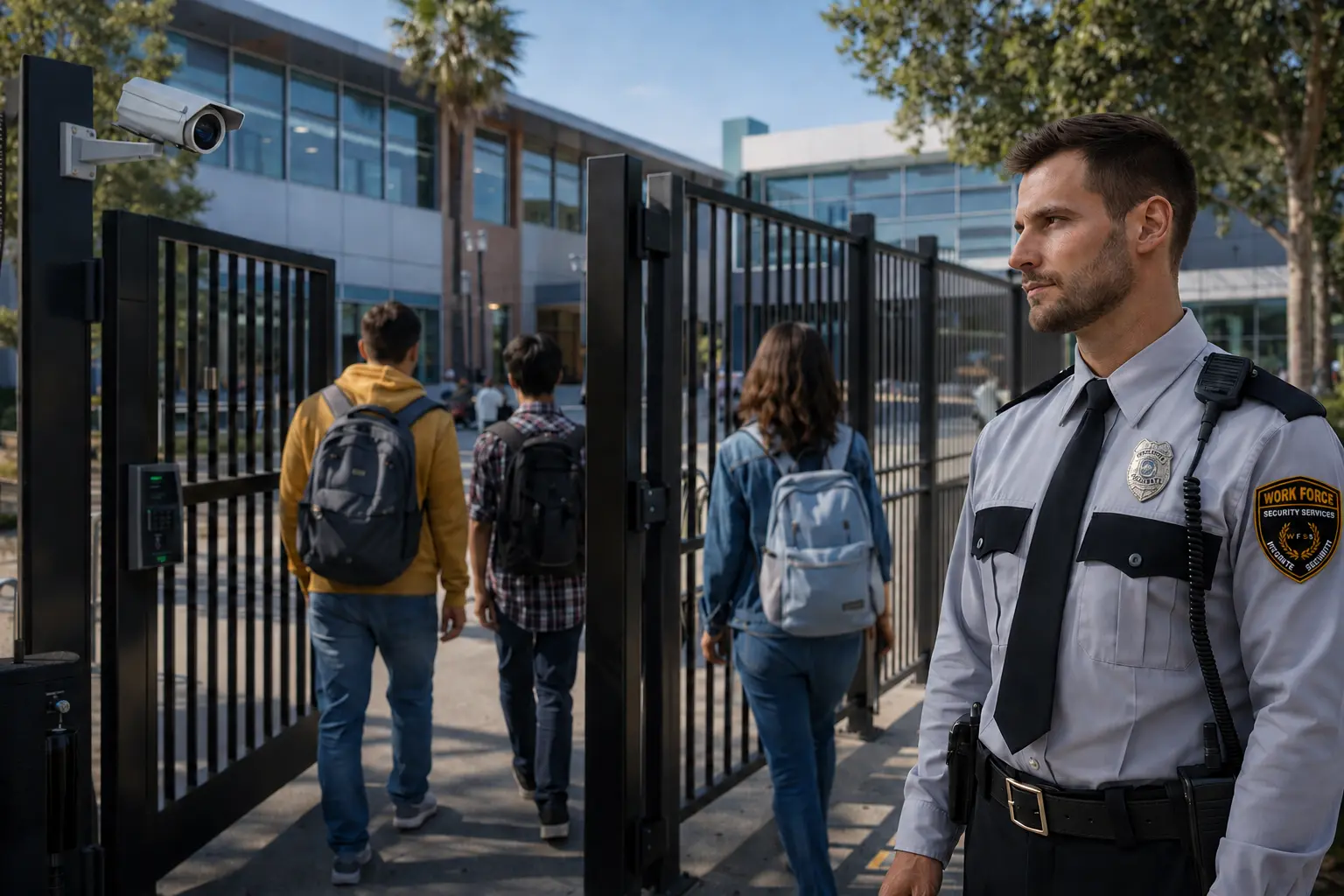
One of the most effective ways to improve campus security is to control access to the property. Many schools establish designated entry points where visitors must check in before entering the campus.
Visitor management procedures may include:
- sign-in requirements at the front office
- issuing visitor badges or passes
- verifying the purpose of the visit
- escorting visitors when necessary
By directing all visitors through a central entry location, schools can monitor who enters the campus and ensure that individuals are authorized to be there.
This practice also helps staff quickly identify unfamiliar individuals who may need assistance or verification.
The Role of Security Personnel
Trained security personnel play an important role in maintaining safety at many schools and campuses. Security officers may assist with monitoring entrances, observing campus activity, and responding to incidents when they occur.
Their responsibilities may include:
- conducting routine patrols around campus grounds
- monitoring entrances and exit points
- assisting with visitor management
- reporting unusual activity
- supporting school staff during emergencies
The presence of security personnel can also act as a deterrent to unwanted activity. When students and visitors see trained professionals monitoring the campus, it reinforces the importance of safety and accountability.
Surveillance and Monitoring Systems
Modern schools often use surveillance systems to improve visibility across campus. Security cameras placed in key locations help administrators monitor activity and respond quickly if incidents occur.
Typical camera placement areas include:
- building entrances and exits
- hallways and corridors
- parking areas
- athletic facilities
- campus perimeters
Surveillance systems are not intended to replace staff supervision but can provide an additional layer of awareness that supports campus safety.
Video footage may also assist administrators in reviewing incidents and identifying potential safety improvements.
Adequate Lighting Across the Campus
Lighting is an important but sometimes overlooked component of campus security. Well-lit environments improve visibility and help discourage vandalism or unauthorized activity.
Outdoor areas such as walkways, parking lots, and sports facilities should have sufficient lighting to allow students and staff to move safely around the campus during early mornings or evening hours.
Lighting also supports surveillance systems by ensuring that cameras capture clear footage in darker areas.
Emergency Preparedness and Response Planning
Schools must be prepared to respond effectively to emergencies. Emergency preparedness planning helps ensure that staff and students know how to react if unexpected incidents occur.
Common elements of emergency preparedness plans include:
- evacuation procedures
- lockdown protocols
- communication plans for staff and families
- coordination with local emergency services
Regular training and drills allow staff and students to practice these procedures so that they can respond quickly and calmly when necessary.
Preparedness planning helps reduce confusion and improve the overall safety of the campus community.
Communication and Coordination with Local Authorities
Schools often work closely with local law enforcement and emergency services to maintain safety. Collaboration with these agencies helps ensure that schools have access to professional support if incidents occur.
Local police departments may assist schools by:
- conducting safety assessments
- guiding security procedures
- responding to emergencies
Strong communication between school administrators and local authorities helps create a coordinated approach to campus safety.
Monitoring Parking Areas and Transportation Zones
Parking areas and student drop-off zones can become busy and sometimes chaotic during arrival and dismissal times. These areas require careful monitoring to ensure that students, parents, and staff can move safely.
Security personnel or staff members may assist with:
- directing traffic flow
- monitoring pedestrian crossings
- observing activity in parking lots
Maintaining order in these areas reduces the likelihood of accidents and helps ensure that students can enter and leave campus safely.
Promoting a Culture of Safety and Awareness
Security is not only about physical measures and personnel. A safe campus environment also depends on awareness and cooperation among students, teachers, and staff.
Schools often encourage community participation in safety by promoting practices such as:
- reporting suspicious activity
- Following visitor procedures
- respecting campus rules and policies
When everyone understands their role in maintaining safety, it becomes easier to prevent incidents and respond effectively to concerns.
Regular Security Assessments
Campus environments change over time as new buildings are constructed, student populations grow, and new programs are introduced. Regular security assessments help administrators evaluate whether current measures remain effective.
These assessments may involve reviewing:
- entry points and access control
- surveillance coverage
- lighting conditions
- emergency procedures
By identifying potential vulnerabilities, schools can make adjustments that improve safety and maintain a secure learning environment.
Balancing Security with a Positive Learning Environment
While security is essential, schools must also maintain an environment that supports learning, collaboration, and community engagement. Security measures should be designed to protect students and staff without creating an atmosphere that feels restrictive or intimidating.
The goal of campus security is not only to prevent incidents but also to promote confidence and peace of mind among everyone who uses the campus.
A well-planned security strategy balances protection with openness, ensuring that schools remain welcoming places where students can focus on their education.
Supporting Safe Educational Communities
Educational institutions across Los Angeles are committed to providing safe environments where students can grow and succeed. By implementing effective security practices—such as controlled access, trained security personnel, surveillance systems, and emergency preparedness—schools can reduce risks and respond effectively to challenges.
Although no security strategy can eliminate every risk, thoughtful planning and consistent attention to safety significantly improve campus protection.
For administrators, educators, and security professionals, maintaining a secure campus is an ongoing responsibility that supports both the well-being of students and the success of the educational community.