📞
BSIS PPO License: 122365
+1 (818) 966-2279
✉️
Sahnaz@workforcesecurityservices.com
How to Manage Guest Safety Without Affecting Hospitality
The hospitality industry is built on creating memorable guest experiences. Whether operating a luxury hotel, boutique property, resort, conference center, or extended-stay accommodation, guests expect to feel welcome, comfortable, and secure throughout their visit.
At the same time, hotels face an increasingly complex range of security challenges. From unauthorized visitors and theft to emergencies and workplace safety concerns, hospitality businesses must protect guests, employees, and property without creating an atmosphere that feels restrictive or intimidating.
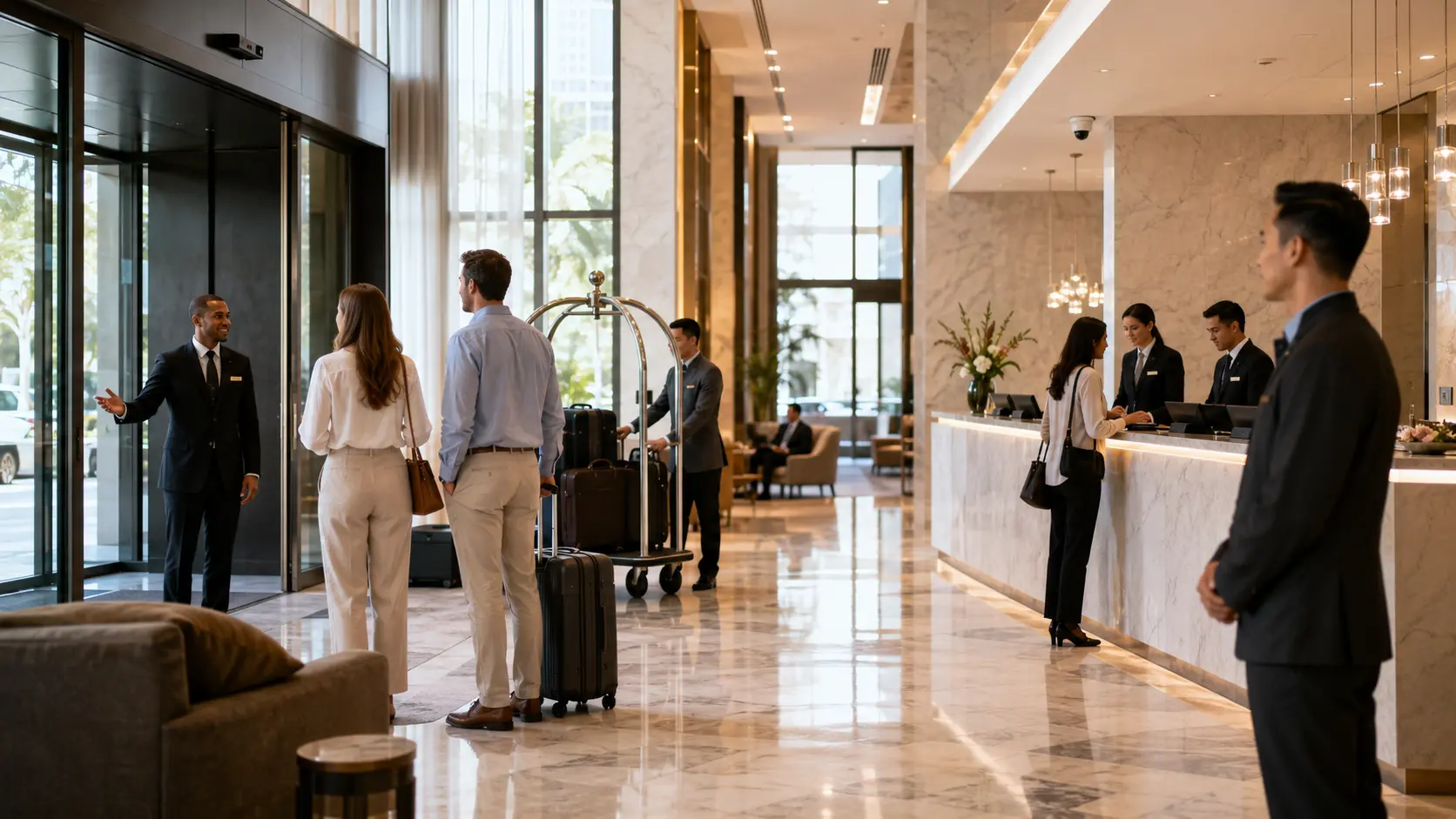
The most successful hotels understand that excellent security should be visible enough to inspire confidence while remaining discreet enough to preserve the welcoming environment guests expect. By combining trained personnel, thoughtful operational procedures, and modern technology, hospitality businesses can achieve both exceptional guest service and effective security.
This guide explores practical strategies for managing guest safety without compromising the hospitality experience.
Why Guest Safety Matters in Hospitality
Guest safety is one of the most important factors influencing a hotel’s reputation and long-term success. Travelers often choose accommodations where they believe they will feel secure, particularly when visiting unfamiliar destinations or traveling with family.
A comprehensive safety program helps hotels:
- Protect guests and employees
- Reduce security incidents
- Support operational continuity
- Improve guest confidence
- Protect company reputation
- Encourage positive reviews
- Meet legal and regulatory responsibilities
- Support emergency preparedness
Security should enhance the guest experience—not detract from it.
Balancing Security with Hospitality
The primary challenge for hospitality businesses is maintaining a balance between protection and customer service.
Guests appreciate security measures that:
- Feel professional rather than intrusive
- Are easy to navigate
- Respect privacy
- Assist when needed
- Blend naturally into daily operations
Instead of creating barriers, effective security should quietly support a smooth and enjoyable guest experience.
Common Security Challenges in Hotels
Hotels and resorts encounter a variety of security concerns, including:
- Unauthorized visitors
- Room theft
- Vehicle theft
- Lost property
- Workplace violence
- Medical emergencies
- Intoxicated guests
- Disruptive behavior
- Trespassing
- Emergency evacuations
Understanding these risks helps management develop practical and proportionate security measures.
Train Security Officers in Customer Service
Hospitality security differs significantly from many other security environments.
Professional hotel security officers should be trained to:
- Welcome guests courteously
- Provide directions
- Assist with luggage when appropriate
- Answer general questions
- Remain approachable
- Observe discreetly
- De-escalate conflicts professionally
Guests should view security personnel as helpful members of the hospitality team rather than solely as enforcement personnel.
Maintain a Visible Yet Non-Intrusive Security Presence
An effective security presence reassures guests without making them feel uncomfortable.
Hotels often achieve this by:
- Positioning security officers near entrances
- Conducting regular but unobtrusive patrols
- Monitoring public spaces
- Wearing professional uniforms
- Maintaining friendly interactions
Visible security can deter unwanted activity while reinforcing guest confidence.
Use Smart Access Control
Modern hotels rely on electronic access control to protect guest rooms and staff-only areas.
Examples include:
- Key card systems
- Mobile room keys
- Electronic locks
- Staff identification badges
- Restricted service corridors
- Elevator access controls
Access control helps prevent unauthorized entry while remaining largely invisible to guests.
Strengthen Visitor Management
Hotels welcome numerous visitors every day, including guests, vendors, contractors, delivery personnel, and event attendees.
Effective visitor management may include:
- Reception verification
- Event registration
- Vendor identification
- Delivery procedures
- Restricted back-of-house access
- Temporary credentials for contractors
These procedures improve accountability without disrupting normal operations.
Monitor Public Areas with Surveillance
Video surveillance helps security teams monitor activity while supporting investigations if incidents occur.
Common camera locations include:
- Hotel entrances
- Reception areas
- Parking facilities
- Hallways
- Loading docks
- Service entrances
- Elevators
- Public gathering spaces
Surveillance should be implemented in accordance with applicable privacy laws and should never extend into guest rooms or other areas where guests have a reasonable expectation of privacy.
Prioritize Well-Lit Spaces
Lighting contributes to both safety and guest comfort.
Important areas include:
- Parking lots
- Walkways
- Hotel entrances
- Pool areas
- Outdoor seating
- Loading zones
- Emergency exits
Well-maintained lighting improves visibility while creating a welcoming atmosphere.
Develop Effective Emergency Response Plans
Hotels should prepare for a variety of emergencies.
Examples include:
- Fire alarms
- Medical emergencies
- Severe weather
- Utility outages
- Suspicious packages
- Active threats
- Evacuations
- Natural disasters
Staff should understand emergency procedures and participate in regular training exercises.
Focus on Conflict De-escalation
Security personnel frequently encounter situations involving upset guests, billing disputes, intoxication, or misunderstandings.
Professional de-escalation techniques include:
- Active listening
- Calm communication
- Empathy
- Maintaining appropriate distance
- Offering practical solutions
- Involving management when necessary
Resolving issues respectfully often prevents situations from escalating.
Protect Guest Privacy
Privacy is essential in the hospitality industry.
Hotels should protect guest information by:
- Verifying identities before discussing reservations
- Limiting access to guest records
- Securing digital systems
- Training employees on confidentiality
- Preventing unauthorized room information disclosures
Strong privacy practices build trust and confidence.
Secure Parking Areas
Hotel parking facilities should receive regular attention because they often experience less supervision than interior spaces.
Best practices include:
- Regular patrols
- Surveillance cameras
- Emergency call stations where appropriate
- Adequate lighting
- Clear directional signage
- Controlled access for private parking
Visible monitoring can discourage theft and vandalism.
Collaborate Across Departments
Guest safety is a shared responsibility.
Departments that contribute include:
- Front desk
- Housekeeping
- Engineering
- Food and beverage
- Event management
- Maintenance
- Security
- Hotel management
Regular communication ensures potential concerns are addressed promptly.
Use Technology to Enhance Safety
Modern hospitality security often incorporates:
| Security Technology | Purpose |
|---|---|
| CCTV Systems | Monitor public areas |
| Electronic Key Cards | Secure guest rooms |
| Mobile Room Keys | Improve convenience and access control |
| Visitor Management Systems | Track authorized visitors |
| Access Control Systems | Protect restricted areas |
| Emergency Notification Systems | Alert guests and staff during emergencies |
| Incident Reporting Software | Document security events |
| Alarm Systems | Detect unauthorized access |
Technology supports staff while improving operational efficiency.
Build a Culture of Safety
A successful hospitality security program goes beyond equipment and procedures.
Hotels should encourage:
- Employee awareness
- Timely incident reporting
- Regular safety meetings
- Ongoing security training
- Collaboration between departments
- Continuous improvement
When safety becomes part of the organizational culture, both guests and employees benefit.
Common Mistakes to Avoid
Hospitality businesses should avoid:
- Excessively aggressive security practices
- Poorly trained security personnel
- Inadequate visitor controls
- Weak communication between departments
- Neglected maintenance issues
- Insufficient lighting
- Ignoring guest complaints related to safety
- Failing to update emergency procedures
Addressing these issues proactively supports a positive guest experience.
Frequently Asked Questions
Should hotels have visible security officers?
Yes. A professional and approachable security presence can reassure guests while deterring unauthorized activity. The key is maintaining visibility without creating an intimidating atmosphere.
How can hotels improve guest safety without making guests uncomfortable?
Hotels can combine courteous security personnel, discreet surveillance, effective access control, staff training, and well-designed procedures to improve safety while preserving a welcoming environment.
What role does hotel staff play in guest safety?
Every department contributes to safety by remaining alert, reporting concerns promptly, following established procedures, and communicating effectively with management and security personnel.
Are surveillance cameras appropriate in hotels?
Yes. Cameras are commonly used in public areas such as entrances, lobbies, parking facilities, and hallways. They should never be installed in guest rooms or other private areas.
Why is de-escalation important in hospitality?
Professional communication and conflict resolution help address concerns respectfully, reduce the likelihood of incidents escalating, and support a positive guest experience.
Conclusion
Guest safety and outstanding hospitality are not competing priorities—they complement one another. Hotels that invest in professional security personnel, thoughtful operational procedures, modern technology, and comprehensive staff training can create environments where guests feel both welcome and protected.
By balancing visible security with exceptional customer service, hospitality businesses strengthen their reputation, improve operational resilience, and foster the trust that encourages guests to return.