📞
BSIS PPO License: 122365
+1 (818) 966-2279
✉️
Sahnaz@workforcesecurityservices.com
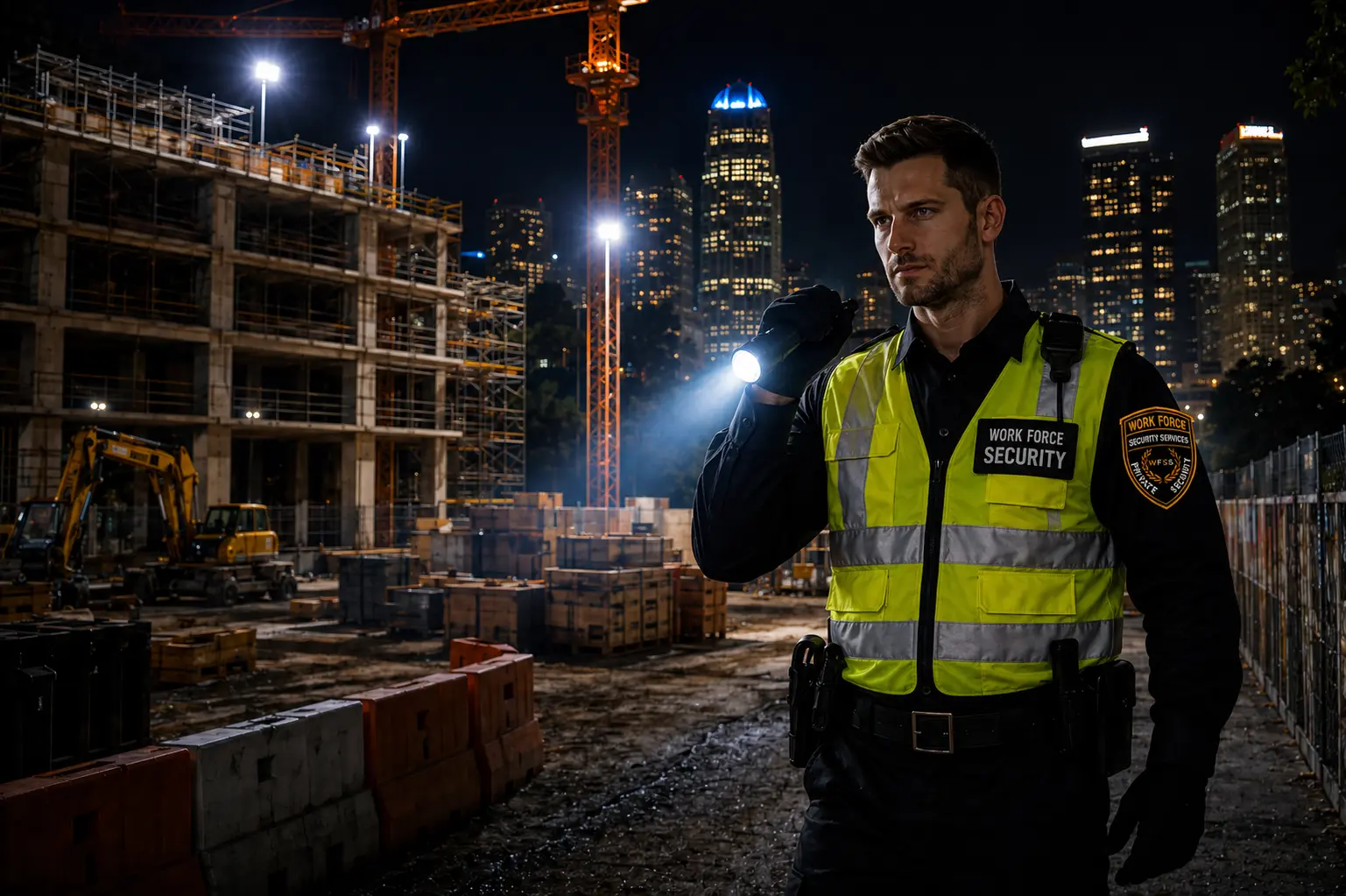
Why Construction Sites in Los Angeles Need Professional Security Guards?
Los Angeles is constantly evolving. New residential buildings, commercial complexes, infrastructure projects, and renovations are visible across the city. Construction activity supports economic growth and development, but it also creates unique security challenges for contractors, developers, and property owners.
Construction sites often contain valuable materials, expensive equipment, and unfinished structures that can attract unwanted attention. Without proper security measures, these sites may become vulnerable to theft, vandalism, trespassing, and safety incidents.
Professional security guards play an important role in protecting construction sites by monitoring activity, deterring criminal behavior, and helping maintain a safe environment for workers and property. For many construction companies in Los Angeles, hiring security personnel has become an essential part of project planning and risk management.
This article explains why construction sites face specific security risks and how professional security guards help reduce those risks.
Understanding Security Risks at Construction Sites
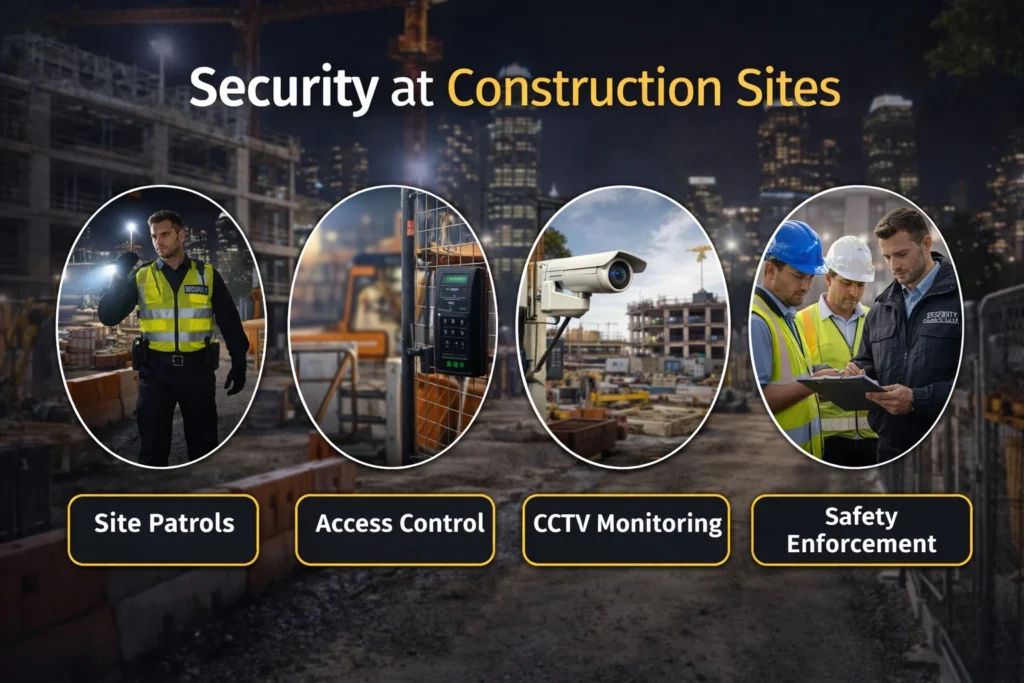
Construction sites are different from most other commercial environments. Unlike completed buildings, they often lack permanent walls, doors, or security systems during early project phases. Materials and equipment are frequently stored outdoors, and the site layout may change as construction progresses.
These factors can make construction sites more vulnerable to certain types of incidents.
Some common security risks include:
- equipment and tool theft
- vandalism and property damage
- unauthorized entry or trespassing
- theft of building materials
- safety hazards caused by unauthorized access
Construction sites are particularly vulnerable during evenings, weekends, and holidays when workers are not present.
Theft of Equipment and Materials
One of the most significant challenges faced by construction companies is the theft of equipment and materials. Construction sites often store high-value items such as power tools, copper wiring, machinery components, and building materials.
These items can be easy targets if the site is not properly monitored.
The financial impact of theft can be substantial. Stolen equipment may delay project timelines, require costly replacements, and increase insurance expenses. In some cases, specialized machinery may be difficult to replace quickly, which can slow progress on critical phases of construction.
Professional security guards help reduce this risk by monitoring access points, conducting patrols, and observing any suspicious activity around the property.
Preventing Vandalism and Property Damage
Vandalism is another common concern for construction projects. Empty or partially completed buildings may attract individuals who attempt to enter the site and cause damage.
Examples of vandalism may include:
- graffiti on building structures
- damage to construction materials
- destruction of equipment or tools
- tampering with building components
Even minor damage can require repairs or cleanup before work can continue. This may result in additional expenses and delays.
Security personnel provide a visible presence that discourages individuals from entering the property without authorization. Regular patrols and monitoring help ensure that the site remains protected after work hours.
Controlling Unauthorized Access
Construction sites can present safety risks for people who are not familiar with the environment. Heavy machinery, open trenches, exposed wiring, and unfinished structures create potential hazards.
Unauthorized individuals who enter the site may be exposed to these dangers, which can lead to injuries or accidents.
In addition to safety concerns, unauthorized entry may create legal liability for construction companies or property owners.
Security guards help manage access by:
- monitoring entry and exit points
- verifying authorized personnel
- preventing unauthorized visitors from entering restricted areas
These measures help ensure that only approved workers and visitors are allowed on the site.
Protecting Workers and Contractors
Construction sites are active work environments where many contractors, subcontractors, and suppliers may be present. While most individuals are legitimate workers, large projects can sometimes experience disputes, disturbances, or safety concerns.
Security personnel can help maintain order and ensure that workers feel safe while performing their duties.
Security guards may assist by:
- monitoring worker access areas
- observing interactions and reporting unusual behavior
- responding to disturbances or conflicts
A professional security presence can contribute to a safer and more organized workplace.
Monitoring the Site During Non-Working Hours
Many construction projects operate only during daytime hours. However, security risks often increase during the evening or overnight periods when the site is unoccupied.
Professional security guards can provide overnight monitoring that includes:
- routine patrols of the site
- inspection of storage areas and equipment
- checking perimeter fencing and gates
- observing surrounding activity
These patrols help detect suspicious activity early and discourage individuals from attempting to enter the property.
Supporting Compliance with Safety and Security Policies
Construction companies must follow a variety of safety regulations and workplace standards. While security guards are not responsible for enforcing all safety rules, they can help support site policies by observing activity and reporting potential concerns.
For example, security personnel may notify supervisors if they observe:
- damaged perimeter fencing
- unauthorized individuals on site
- open access points or unsecured materials
Early detection of these issues allows project managers to address potential problems before they escalate.
The Deterrent Effect of Visible Security Presence
One of the most effective aspects of professional security services is the deterrent effect created by visible personnel. When individuals see trained security officers monitoring a construction site, they are less likely to attempt unauthorized entry or theft.
Security guards demonstrate that the property is actively protected and supervised.
This visible presence can help discourage opportunistic crimes that often occur when sites appear unattended.
Integrating Security Guards with Other Security Measures
While security guards provide valuable protection, construction sites often benefit from combining personnel with additional security measures.
Examples of supporting security tools include:
- perimeter fencing
- surveillance cameras
- lighting systems
- controlled entry gates
When these elements work together, they create a layered security approach that improves overall site protection.
Security guards can monitor these systems and respond if alerts or suspicious activity are detected.
Protecting Project Timelines and Budgets
Construction projects often operate under strict deadlines and budgets. Security incidents such as theft or vandalism can disrupt schedules and increase costs.
Replacing stolen equipment, repairing damage, or addressing safety incidents may slow progress and affect project timelines.
By reducing the likelihood of these incidents, professional security services help support smoother project operations.
For developers and contractors, investing in security protection may ultimately help prevent larger financial losses caused by delays or damage.
Security Planning for Different Construction Phases
Construction sites evolve as projects progress, and security needs may change over time. During early phases, the focus may be on protecting equipment and materials stored on open lots.
Later stages may require greater access control as building structures take shape and more workers enter the site.
Professional security providers can help assess these changing needs and adjust security strategies accordingly.
A flexible security plan ensures that protection remains effective throughout the life of the project.
Choosing Professional Security Services for Construction Sites
When hiring security services for construction projects, companies often look for providers that understand the specific risks associated with construction environments.
Important considerations may include:
- experience with construction site security
- trained and licensed security personnel
- ability to provide patrol services during non-working hours
- coordination with project managers and site supervisors
Working with experienced security professionals helps ensure that security strategies align with the needs of the construction project.
Supporting Safe and Secure Construction Projects
Construction sites play an important role in the growth and development of Los Angeles. Protecting these sites helps ensure that projects are completed safely, efficiently, and without unnecessary disruptions.
Professional security guards contribute to this process by deterring criminal activity, monitoring property conditions, and supporting safe site management.
While no security solution can eliminate risk, a well-planned security strategy significantly reduces the likelihood of theft, vandalism, and unauthorized access.
For construction companies and developers, investing in professional security services is an important step toward protecting valuable assets and maintaining a secure working environment throughout the construction process.