📞
BSIS PPO License: 122365
+1 (818) 966-2279
✉️
Sahnaz@workforcesecurityservices.com
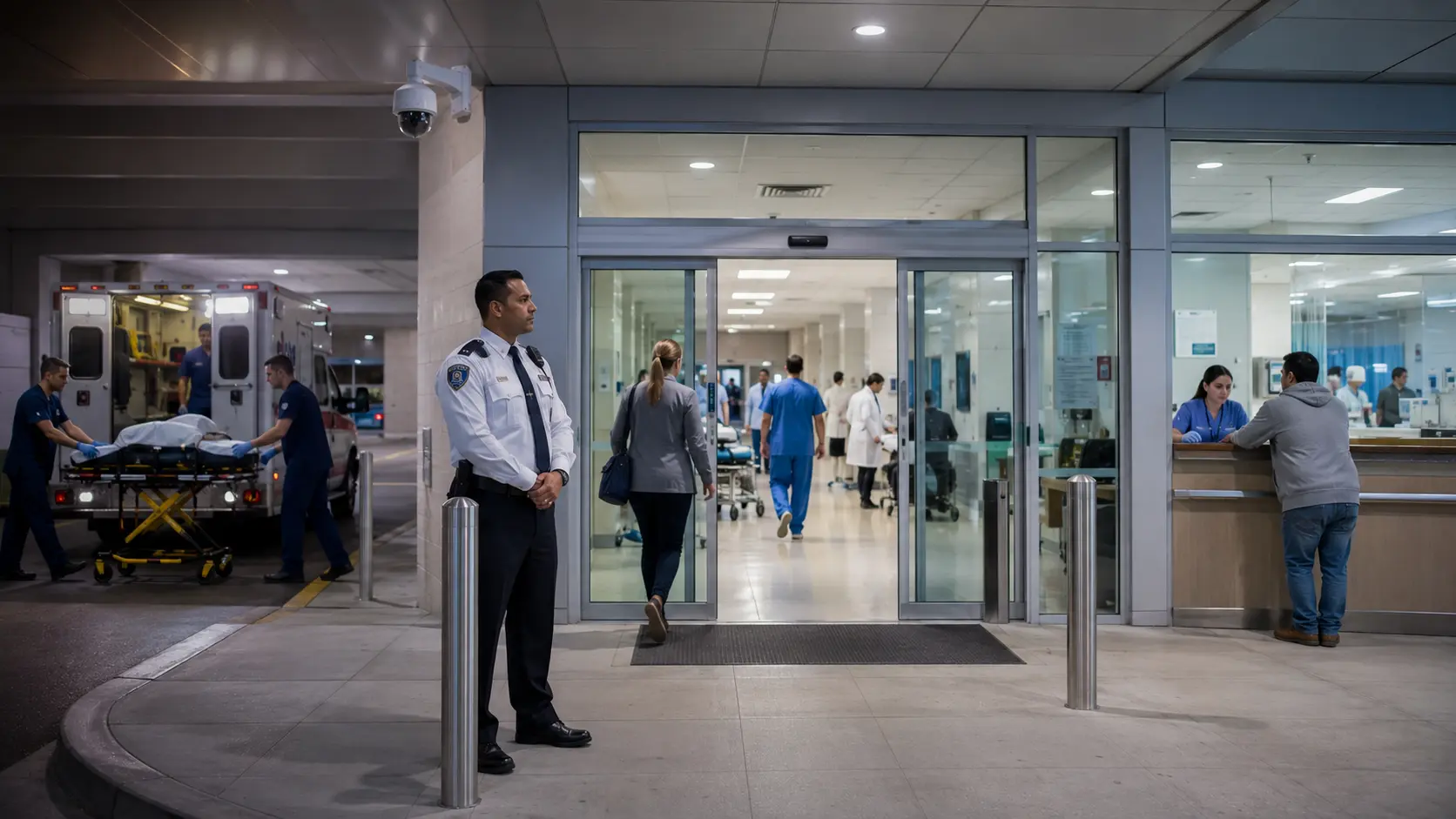
Emergency Department Security Challenges: Protecting Patients, Staff, and Critical Healthcare Operations
Emergency departments (EDs) operate in one of the most demanding healthcare environments. They provide immediate medical care to patients experiencing life-threatening illnesses, traumatic injuries, behavioral health emergencies, and other urgent medical conditions. Unlike many other hospital departments, emergency departments remain open 24 hours a day and must accommodate unpredictable patient volumes, emotionally charged situations, and a continuous flow of visitors, emergency responders, and healthcare professionals.
These operational realities create unique security challenges. Healthcare organizations must balance open public access with the need to protect patients, visitors, physicians, nurses, and support staff from physical security risks.
A comprehensive emergency department security program combines trained personnel, physical security measures, technology, staff training, and clearly defined procedures to create a safe environment while supporting uninterrupted patient care.
Why Emergency Departments Face Elevated Security Risks
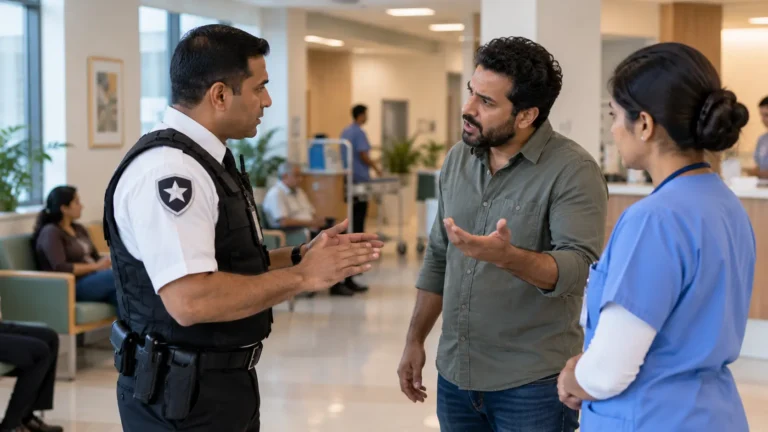
Emergency departments differ from most healthcare settings because they regularly receive patients under stressful, unpredictable, or volatile circumstances.
Common contributing factors include:
- High patient turnover
- Emotional distress among patients and family members
- Behavioral health emergencies
- Substance intoxication
- Long wait times
- Restricted treatment areas
- Continuous public access
- Critical medical emergencies
These factors increase the likelihood of security incidents compared to many other hospital departments.
Common Emergency Department Security Challenges
1. Workplace Violence
Healthcare workers face a higher risk of workplace violence than employees in many other industries. Emergency departments are particularly vulnerable because staff frequently interact with individuals experiencing pain, fear, confusion, emotional distress, or altered mental states.
Potential incidents may include:
- Verbal abuse
- Threatening behavior
- Physical assaults
- Aggressive family members
- Property damage
Reducing workplace violence requires early recognition of escalating behaviors, staff training, clear reporting procedures, and coordinated security responses.
2. Uncontrolled Visitor Access
Emergency departments often receive a continuous stream of visitors, family members, emergency medical personnel, contractors, and vendors.
Without effective visitor management, facilities may experience:
- Unauthorized access to treatment areas
- Overcrowding
- Patient privacy concerns
- Interference with medical operations
- Difficulty locating individuals during emergencies
Controlled visitor screening helps balance accessibility with patient safety.
3. Behavioral Health Emergencies
Patients experiencing psychiatric crises may present unique safety concerns for themselves, healthcare staff, and others within the emergency department.
Healthcare facilities should establish procedures for:
- Safe patient observation
- De-escalation
- Secure treatment environments
- Coordination between clinical staff and security personnel
Security responses should prioritize patient dignity while supporting clinical care.
4. Drug Diversion and Controlled Substance Protection
Emergency departments store medications that require strict security controls.
Potential risks include:
- Unauthorized access
- Internal theft
- Diversion of controlled substances
- Tampering
Security measures often include restricted access, surveillance, inventory controls, and documented handling procedures.
5. Infant and Child Protection
Facilities treating pediatric patients require additional safeguards to help prevent unauthorized removal of children.
Protective measures may include:
- Controlled access points
- Visitor verification
- Identification procedures
- Electronic monitoring systems
- Staff awareness training
These measures complement established hospital policies and applicable regulations.
6. Theft of Personal Property
Patients arriving during emergencies may carry valuables such as:
- Wallets
- Mobile phones
- Jewelry
- Laptops
- Medical equipment
Clear procedures for documenting and securing patient belongings help reduce loss and support patient trust.
7. Emergency Department Overcrowding
Periods of high patient volume may create operational challenges such as:
- Congested waiting rooms
- Increased visitor frustration
- Reduced visibility
- Delayed movement through secure areas
Security personnel can assist by supporting orderly access, monitoring public areas, and coordinating with hospital staff during periods of increased demand.
8. Unauthorized Entry into Restricted Areas
Critical areas requiring protection include:
- Trauma rooms
- Medication storage
- Staff-only corridors
- Equipment rooms
- Information technology spaces
Electronic access control combined with active monitoring helps reduce unauthorized entry.
The Role of Professional Hospital Security Officers
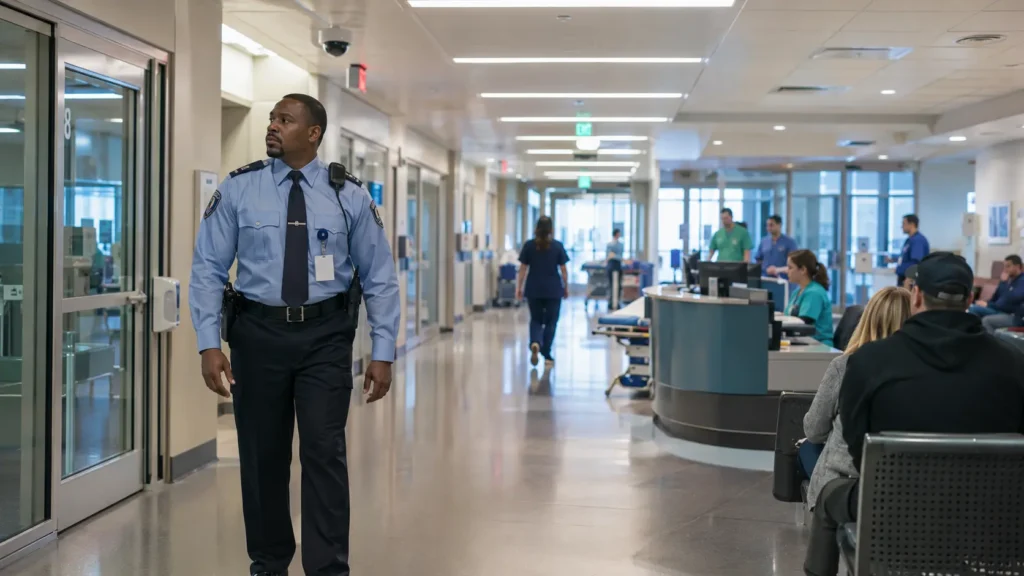
Hospital security officers perform a variety of preventive and response functions that support healthcare operations without interfering with clinical care.
Typical responsibilities include:
- Monitoring entrances and exits
- Managing visitor access
- Conducting routine patrols
- Responding to disturbances
- Assisting during emergencies
- Protecting restricted areas
- Supporting workplace violence response procedures
- Documenting security incidents
Their role emphasizes prevention, observation, communication, and coordination with hospital leadership and emergency responders when appropriate.
Technology That Supports Emergency Department Security
Modern healthcare facilities often integrate multiple technologies into their security programs.
Examples include:
| Security Technology | Purpose |
|---|---|
| CCTV Surveillance | Monitor public and restricted areas |
| Access Control Systems | Limit entry to authorized personnel |
| Visitor Management Systems | Register and verify visitors |
| Panic Alarms | Summon assistance quickly |
| Duress Buttons | Enable discreet emergency alerts |
| Radio Communications | Coordinate security responses |
| Electronic Incident Reporting | Document security events |
| Security Lighting | Improve visibility around entrances |
Technology enhances situational awareness but works best alongside trained personnel and established procedures.
Visitor Management Best Practices
Visitor management helps maintain a safe and organized environment.
Effective practices include:
- Visitor identification
- Sign-in procedures
- Temporary visitor badges
- Escort requirements for restricted areas
- Visiting hour policies
- Family waiting area management
- Clear communication regarding access restrictions
These measures support patient privacy while helping staff identify authorized visitors.
De-escalation as a Core Security Strategy
Many security incidents can be reduced through effective communication before situations escalate.
Security officers and healthcare personnel may receive training in:
- Active listening
- Calm verbal communication
- Conflict resolution
- Maintaining appropriate personal space
- Recognizing behavioral warning signs
- Coordinated team responses
Whenever possible, de-escalation strategies are preferred before considering more restrictive interventions, consistent with hospital policies and applicable legal requirements.
Security Patrols Within Emergency Departments
Routine patrols help identify concerns before they become incidents.
Patrols may include inspections of:
- Public entrances
- Ambulance bays
- Waiting rooms
- Parking areas
- Staff entrances
- Loading docks
- Exterior walkways
- Restricted corridors
Visible patrols also reassure staff, patients, and visitors that the facility is actively monitored.
Emergency Preparedness and Incident Response
Healthcare organizations should maintain documented response procedures for a range of emergencies.
Examples include:
- Active threat situations
- Fire alarms
- Severe weather
- Utility failures
- Hazardous material incidents
- Large-scale casualty events
- Evacuations
- Missing patient procedures
Regular drills and multidisciplinary coordination help improve preparedness and clarify staff responsibilities.
Supporting Healthcare Staff Safety
A strong security program contributes to employee well-being by:
- Reducing exposure to workplace violence
- Providing rapid assistance during incidents
- Monitoring high-risk areas
- Encouraging incident reporting
- Supporting post-incident reviews
- Reinforcing a culture of safety
Employee participation and leadership support are essential components of effective security.
Best Practices for Emergency Department Security
Healthcare facilities can strengthen security by:
- Conducting regular security risk assessments
- Reviewing visitor management procedures
- Maintaining effective access control
- Providing workplace violence prevention training
- Ensuring adequate lighting around entrances
- Coordinating with local emergency services
- Performing routine patrols
- Reviewing incident trends
- Updating emergency response plans
- Evaluating security technology periodically
Continuous improvement helps organizations adapt to changing risks while supporting high-quality patient care.
Common Mistakes to Avoid
Healthcare organizations should avoid:
- Relying solely on surveillance cameras
- Leaving restricted doors unsecured
- Failing to report minor incidents
- Inadequate visitor screening
- Infrequent security training
- Outdated emergency response procedures
- Poor communication between departments
Addressing these issues proactively can improve both safety and operational efficiency.
Frequently Asked Questions
Why are emergency departments considered high-risk environments?
Emergency departments operate continuously, receive unpredictable patient populations, and frequently manage emotionally charged situations, making them more susceptible to security incidents than many other healthcare settings.
Can hospital security officers use force?
Security personnel must follow applicable laws, hospital policies, and organizational procedures. Their primary focus is prevention, observation, communication, and de-escalation, with physical intervention limited to circumstances where it is lawful, necessary, and authorized.
How does visitor management improve hospital security?
Visitor management helps verify authorized access, reduce overcrowding, support patient privacy, and improve accountability within healthcare facilities.
Are security cameras enough to protect an emergency department?
Surveillance systems are valuable for monitoring and documenting events, but they are most effective when integrated with trained personnel, access control, visitor management, and comprehensive security procedures.
How often should hospitals review emergency department security?
Security programs should be reviewed regularly and updated following major incidents, operational changes, renovations, or identified vulnerabilities. Many organizations also conduct periodic drills and annual security assessments.
Conclusion
Emergency departments face unique security challenges due to their open-access nature, unpredictable patient volumes, and the critical care they provide. A comprehensive security program combines trained personnel, effective visitor management, access control, surveillance technology, workplace violence prevention, and ongoing staff training to support a safe environment for patients, visitors, and healthcare professionals.
By conducting regular security assessments, strengthening operational procedures, and fostering collaboration between clinical and security teams, healthcare organizations can better manage risks while maintaining compassionate, uninterrupted patient care.