📞
BSIS PPO License: 122365
+1 (818) 966-2279
✉️
Sahnaz@workforcesecurityservices.com

Security Risk Assessment: A Step-by-Step Guide for Businesses
Every business faces security risks, whether it’s theft, vandalism, workplace violence, unauthorized access, cyber-physical threats, or natural disasters. While no organization can eliminate every risk, a structured security risk assessment helps identify vulnerabilities, prioritize threats, and implement effective security measures before incidents occur.
A professional security risk assessment is not simply a checklist—it is a systematic evaluation of people, property, operations, and existing security controls. Businesses of every size, from retail stores and office buildings to warehouses, hospitals, hotels, schools, and construction sites, can benefit from conducting regular assessments.
This guide explains how businesses can perform a comprehensive security risk assessment using industry-recognized principles and practical best practices.
What Is a Security Risk Assessment?
A security risk assessment is a structured process used to identify potential threats, evaluate vulnerabilities, estimate the likelihood and potential impact of incidents, and recommend measures to reduce security risks.
The primary objective is to answer four important questions:
- What assets need protection?
- What threats could affect those assets?
- How vulnerable are current security measures?
- What actions will reduce the identified risks?
Rather than reacting after an incident occurs, organizations use risk assessments to proactively improve their security posture.
Why Every Business Should Conduct Security Risk Assessments
Security threats evolve continuously. Criminal methods, operational risks, and workplace environments change over time. A one-time assessment conducted years ago may no longer reflect current risks.
Regular assessments help organizations:
- Reduce theft and property damage
- Improve employee and visitor safety
- Strengthen access control procedures
- Protect confidential information
- Identify weaknesses before they become incidents
- Support emergency preparedness
- Improve regulatory and insurance compliance
- Allocate security resources more effectively
Step 1: Identify Critical Assets
Every assessment begins by identifying what requires protection.
Assets may include:
| Asset Category | Examples |
|---|---|
| People | Employees, visitors, contractors, customers |
| Physical Property | Buildings, offices, warehouses, parking areas |
| Equipment | Computers, machinery, tools, medical devices |
| Inventory | Products, raw materials, valuable goods |
| Information | Business records, customer data, confidential documents |
| Operations | Daily business activities, production, logistics |
Not every asset has equal value. Organizations should prioritize assets based on operational importance and potential consequences if compromised.
Step 2: Identify Potential Threats
Threats vary depending on industry, location, business operations, and surrounding environment.
Common physical security threats include:
Criminal Threats
- Burglary
- Robbery
- Shoplifting
- Cargo theft
- Employee theft
- Organized retail crime
- Vandalism
- Trespassing
Human Safety Threats
- Workplace violence
- Aggressive visitors
- Assault
- Harassment
- Active threat situations
Environmental Threats
- Fire
- Flooding
- Earthquakes
- Severe weather
- Utility failures
Operational Threats
- Unauthorized access
- Tailgating
- Poor visitor management
- Equipment failure
- Power outages
Step 3: Evaluate Existing Security Measures
The next step is understanding what security controls already exist.
Areas to evaluate include:
| Security Measure | Questions to Consider |
|---|---|
| Security Personnel | Are guard patrols adequate? |
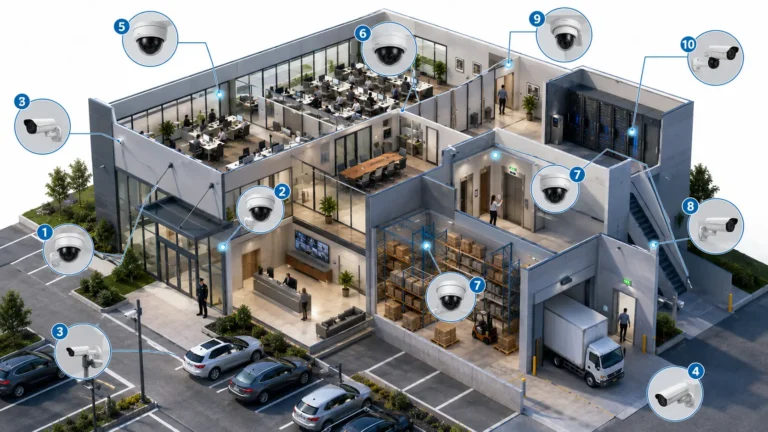
| CCTV | Are cameras covering critical areas? |
| Lighting | Are exterior areas well illuminated? |
| Access Control | Are doors properly secured? |
| Alarm Systems | Are alarms monitored and tested? |
| Visitor Management | Are visitors properly identified? |
| Emergency Plans | Are procedures documented and practiced? |
| Security Policies | Are employees trained on security procedures? |
The goal is to determine whether existing safeguards effectively reduce identified risks.
Step 4: Identify Vulnerabilities
Vulnerabilities are weaknesses that may allow threats to become successful incidents.
Examples include:
- Unlocked service entrances
- Poor exterior lighting
- Blind spots in camera coverage
- Lack of visitor screening
- Broken fencing
- Inadequate employee training
- Missing security procedures
- Shared access credentials
- Unsecured loading docks
- Poor key management
Many security incidents occur because multiple small vulnerabilities exist simultaneously.
Step 5: Assess Likelihood and Impact
Professional assessments evaluate both the probability of an event occurring and its potential consequences.
A simple risk matrix can help prioritize security improvements.
| Likelihood | Impact | Overall Risk |
|---|---|---|
| High | High | Critical |
| High | Medium | High |
| Medium | High | High |
| Medium | Medium | Moderate |
| Low | High | Moderate |
| Low | Low | Low |
This approach allows businesses to focus resources where they are needed most.
Step 6: Prioritize Risks
Not every identified issue requires immediate action.
For example:
| Risk | Priority |
|---|---|
| Unsecured public entrance | High |
| Poor parking lot lighting | High |
| Missing visitor badges | Medium |
| Old perimeter fencing | Medium |
| Cosmetic building damage | Low |
Prioritization ensures budgets are directed toward the greatest risks first.
Step 7: Develop Risk Mitigation Strategies
After risks have been identified, businesses should develop practical mitigation measures.
Possible improvements include:
Physical Security
- Install improved lighting
- Upgrade CCTV coverage
- Improve fencing
- Reinforce doors
- Add intrusion alarms
Administrative Controls
- Visitor management procedures
- Employee security training
- Incident reporting policies
- Contractor access procedures
- Emergency response planning
Personnel
- Security guard services
- Mobile patrols
- Reception screening
- Parking lot patrols
- Event security
Many organizations achieve the best results by combining technology, physical barriers, trained personnel, and well-defined procedures.
Step 8: Document the Assessment
A written report provides accountability and supports future reviews.
A professional assessment typically includes:
- Executive summary
- Facility description
- Identified assets
- Threat analysis
- Vulnerability findings
- Risk ratings
- Photographs (where appropriate)
- Recommendations
- Implementation priorities
Documentation also helps demonstrate due diligence during insurance reviews or regulatory inspections.
Step 9: Implement Security Improvements
Recommendations should be converted into an actionable plan.
An implementation roadmap may include:
| Timeline | Example Actions |
|---|---|
| Immediate | Repair broken locks, improve lighting |
| 30 Days | Update visitor procedures |
| 60 Days | Install additional cameras |
| 90 Days | Employee security training |
| Ongoing | Quarterly security reviews |
Step 10: Review and Update Regularly
Security risk assessments should never be treated as a one-time exercise.
Businesses should review assessments when:
- Expanding facilities
- Renovating buildings
- Moving locations
- Introducing new equipment
- Experiencing security incidents
- Changing business operations
- Hiring additional staff
Many organizations perform comprehensive reviews annually while conducting smaller inspections throughout the year.
Common Mistakes Businesses Make
Avoid these common errors:
- Assuming previous assessments remain valid indefinitely
- Ignoring insider threats
- Overlooking parking lots and exterior areas
- Focusing only on technology
- Failing to train employees
- Not documenting findings
- Ignoring minor security incidents
- Delaying recommended improvements
Even small weaknesses can contribute to larger security incidents if left unaddressed.
The Role of Professional Security Services
While some organizations perform internal assessments, complex facilities or higher-risk environments often benefit from experienced security professionals who can provide an objective evaluation.
Professional security personnel may assist with:
- Site inspections
- Security surveys
- Patrol planning
- Access control recommendations
- Emergency preparedness
- Incident trend analysis
- Security staffing recommendations
External assessments can provide an independent perspective and help identify issues that may be overlooked during routine operations.
Security Risk Assessment Checklist
Use this checklist as a starting point:
| Assessment Area | Status |
|---|---|
| Critical assets identified | ☐ |
| Threats documented | ☐ |
| Vulnerabilities identified | ☐ |
| Existing controls reviewed | ☐ |
| CCTV evaluated | ☐ |
| Lighting inspected | ☐ |
| Access control reviewed | ☐ |
| Emergency procedures verified | ☐ |
| Employee training evaluated | ☐ |
| Risk priorities assigned | ☐ |
| Action plan developed | ☐ |
| Follow-up review scheduled | ☐ |
Frequently Asked Questions
How often should businesses conduct a security risk assessment?
Most organizations benefit from conducting a comprehensive assessment at least once a year. Additional assessments should be performed after major operational changes, facility expansions, significant incidents, or changes in the threat environment.
Who should perform a security risk assessment?
Assessments may be conducted by internal security teams, facility managers, or qualified external security professionals. Independent assessments often provide a more objective evaluation of risks and existing controls.
Does every business need a formal risk assessment?
Organizations of all sizes can benefit from evaluating security risks. The complexity of the assessment should be proportional to the organization’s size, operations, and risk profile.
What’s the difference between a security audit and a security risk assessment?
A security audit generally measures compliance with policies, standards, or procedures. A security risk assessment focuses on identifying threats, vulnerabilities, and potential impacts to determine where improvements are most needed.
Can security technology replace on-site personnel?
Technology such as surveillance cameras, access control systems, and alarms can enhance security but typically works best as part of a layered approach that may also include trained personnel, policies, and physical safeguards.
Conclusion
A structured security risk assessment enables businesses to identify what they need to protect, understand the threats they face, and implement practical measures to reduce risk. By regularly evaluating vulnerabilities, reviewing existing safeguards, and prioritizing improvements, organizations can strengthen safety, support business continuity, and make more informed security decisions.
Security is most effective when approached as an ongoing process rather than a one-time project. Periodic assessments, employee awareness, and continuous improvement help businesses adapt to changing risks and maintain a resilient security posture.